About A.C. POSITION CONTROL SYSTEM
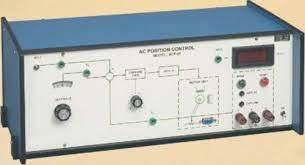
Experience the must-have, latest A.C. POSITION CONTROL SYSTEM-a value-packed, ravishingly engineered solution for precise motion experiments. This highly reliable system features an ineffable PID controller and an unprecedented AC servo motor (220V), delivering refined accuracy via potentiometer-based feedback. Its versatile control input (potentiometer/external 0-5V), coupled with both analog and digital position indications, ensures unmatched operational clarity. Boasting overload and short circuit protections, low noise operation, and housed in a durable MS powder-coated cabinet, this table-top marvel is an ideal choice for academic demonstrations and laboratory usage.
Distinguished Features and Applications
The A.C. Position Control System stands out with mechanically coupled load arm, both analog and digital display modes, as well as vital indicators for power, motor, and errors. Specially tailored for academic training, demonstration of feedback principles, and sophisticated position control experiments, it is widely used as an educational instrument. Its use-type is hands-on, offering practical insights into PID control theory, making it a versatile teaching and experimental tool for engineers and students alike.
Timely Delivery and Certified Assurance
Order completion is prompt and efficient, guaranteeing rapid delivery of your A.C. Position Control System. Each unit is meticulously packaged for safety and comes with comprehensive documentation and accessories. Supplied at a competitive sale price, the system is certified to meet quality standards. Packaging details include cushioned interior and robust exterior cartons, ensuring your product arrives in pristine condition ready for immediate use in labs and training institutes.
FAQ's of A.C. POSITION CONTROL SYSTEM:
Q: How is the position controlled in the A.C. Position Control System?
A: The system uses a PID (proportional, integral, derivative) controller in conjunction with an AC servo motor and potentiometer-based feedback to achieve precise position control.
Q: What are the main benefits of using this system in academic settings?
A: This system provides practical experience in feedback mechanisms, PID control theory, and position control, making it invaluable for hands-on learning and demonstration in laboratories and classrooms.
Q: Where can the A.C. Position Control System be installed or used?
A: The device is designed for standard laboratory environments, featuring table-top mounting and suitable size and noise levels for research, educational institutes, and demonstration labs.
Q: What process is involved in commissioning the system after delivery?
A: Installation is straightforward with included manuals and patch cords. Simply connect the power, attach the load arm, set up the control input, and refer to the experiment sheets for guided use.
Q: When should standard maintenance or checks be performed?
A: Routine checks are recommended before each laboratory session, making sure connections are secure and indicators are functional for optimal performance and longevity.








 Send Inquiry


 Send Inquiry


 English
 Spanish
 French
 German
 Italian
 Chinese (Simplified)
 Japanese
 Korean
 Arabic
 Portuguese