About Co-axial Three Finger Clamp
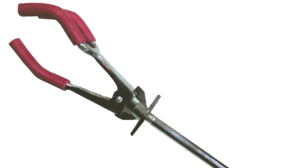
Experience ineffable precision and unbeatable security with our top-ranking Co-axial Three Finger Clamp. Engineered for universal laboratory use, this clamp boasts an advance purchase mechanism with manual screw adjustment for tailored fit. Its jaw opening range of 0-75 mm is ideal for holding scarce glassware, burettes, and condensers, ensuring protection through PVC or rubber-coated jaws. The powder-coated steel body resists corrosion and temperatures up to 180C. Redeem efficient mounting on rods up to 16 mm in diameter and benefit from its smooth, chemically resistant finish. Secure every experiment with this indispensable, three-pronged clamp.
Versatile Application for Laboratory Excellence
The Co-axial Three Finger Clamp is designed to hold laboratory glassware, burettes, and condensers securely. Its application media covers various scientific settings, with the site of application being standard laboratory rods up to 16 mm in diameter. The clamp's surface of application features PVC or rubber-coated jaws, ensuring reliable grip while preventing damage to delicate glass surfaces. Its design achieves both operational flexibility and glass protection, making it a universally adaptable laboratory tool.
Certifications, Sample Policy, and Packaging for Market Value
Our Co-axial Three Finger Clamp meets stringent laboratory standards for performance and durability, elevating its market value. Samples are available upon request to help you assess quality before commitment. Each clamp is packed in secure packaging ensuring safe delivery through reliable shipping channels. We guarantee prompt delivery across diverse locations, supported by our commitment to secure shipping and exceptional sample policy, thus safeguarding customer investment in every transaction.
FAQ's of Co-axial Three Finger Clamp:
Q: How do I adjust the jaw opening on the Co-axial Three Finger Clamp?
A: The jaw opening is adjusted manually using the thumb screw locking mechanism, allowing precise positioning from 0 to 75 mm based on your application needs.
Q: What types of laboratory glassware can the clamp hold without causing damage?
A: Thanks to PVC or rubber-coated jaws, the clamp can safely grip burettes, flasks, condensers, and other fragile glassware without scratching or cracking their surfaces.
Q: Where can I mount the Co-axial Three Finger Clamp in my lab setup?
A: This clamp is compatible with rods up to 16 mm diameter, fitting standard laboratory frames and apparatus stands easily.
Q: What benefits does the three-prong design provide for laboratory applications?
A: The three-pronged, co-axial design offers a secure, non-slip grip, minimizing the risk of accidents and ensuring stable support for your equipment during procedures.
Q: What process is followed for sample requests and delivery?
A: Sample requests can be made directly to distributors or suppliers. Once approved, the clamp is shipped in secure packaging, ensuring timely delivery to your location.
Q: How is the clamp's protective surface beneficial for delicate applications?
A: The PVC or rubber-coated jaws safeguard delicate glassware from chips or scratches, enabling safe, repeatable use in demanding scientific environments.







 Send Inquiry


 Send Inquiry


 English
 Spanish
 French
 German
 Italian
 Chinese (Simplified)
 Japanese
 Korean
 Arabic
 Portuguese