About Laboratory Viscometer
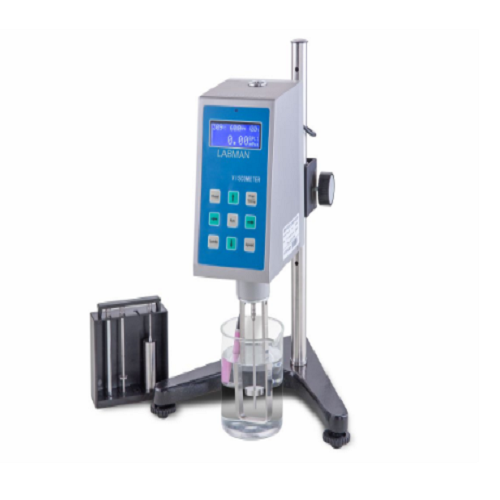
Laboratory Viscometer
| Model Name/Number |
LMDV60 |
| Viscosity |
20-2,000,000 |
| Material |
Mild Steel |
| Usage/Application |
Laboratory |
| Type |
Rotational Viscometer |
| Maximum Viscosity Range |
20-2,000,000 |
| Country of Origin |
Made in India
|
Versatile Viscosity MeasurementThis digital rotational viscometer is designed for precise and versatile viscosity measurements, offering a broad range from 10 to 2,000,000 mPas. The device includes four interchangeable stainless steel spindles and operates between 0.3 to 60 rpm, enabling compatibility with diverse sample viscosities. Its external bath compatibility allows for temperature-controlled measurements up to 100C, making it ideal for comprehensive laboratory testing.
User-Friendly Features and Safe OperationA digital push-button control system and a backlit LCD display ensure intuitive operation and immediate readability, even in low-light environments. Safety is enhanced by built-in alarm functions and an auto-calibration feature for consistent accuracy (1% full scale). The viscometer's robust design, including a metal body and stainless steel spindle, ensures long-lasting durability and compliance with global standards.
FAQ's of Laboratory Viscometer:
Q: How does the viscometer accommodate samples with differing viscosity levels?
A: The viscometer comes with a standard set of four stainless steel spindles, each designed for different viscosity ranges. By selecting the appropriate spindle and adjusting the speed (0.3-60 rpm), users can accurately measure samples within the full 10 to 2,000,000 mPas range.
Q: What is the process for setting up and using the laboratory viscometer?
A: To set up, place the sample (up to 500 ml) in the provided cup, attach the correct spindle, and position the spindle into the sample. Use the digital push-button controls to select the spindle, set the speed and temperature if using an external bath, and start the measurement. Results are displayed clearly on the backlit LCD screen.
Q: When should I calibrate the viscometer, and how is it performed?
A: Calibration is recommended before first use, after major maintenance, or if measurement discrepancies arise. The instrument features an auto-calibration option, which can be initiated through the digital interface, ensuring results remain within the 1% accuracy range.
Q: Where can the viscometer be used, and which industries benefit most?
A: This viscometer is mainly designed for laboratory use and is widely utilized in academic research, quality control, chemical, pharmaceutical, and food industries across India. Its compliance with ISO 2555 and ASTM D2196 ensures suitability for standardized testing environments.
Q: What advantages does the RS232 data output interface provide?
A: The RS232 interface allows seamless data transfer to computers or printers for documentation and analysis, improving workflow efficiency and aiding in record-keeping for compliance and research purposes.
Q: How does temperature resistance enhance the viscometer's capabilities?
A: With resistance up to 100C and compatibility with external heating baths, the device can handle samples requiring elevated temperatures. This broadens its application scope and improves test accuracy for temperature-sensitive viscosities.
Q: What are the key benefits of using this digital laboratory viscometer?
A: Benefits include a wide measurement range, reliable accuracy, intuitive digital controls, multiple spindle selection, programmable profiles, and advanced features like auto-calibration and alarms. Its robust and compliant design ensures durable performance in demanding laboratory conditions.








 Send Inquiry


 Send Inquiry


 English
 Spanish
 French
 German
 Italian
 Chinese (Simplified)
 Japanese
 Korean
 Arabic
 Portuguese