About Rotary Vacuum Film Evaporator
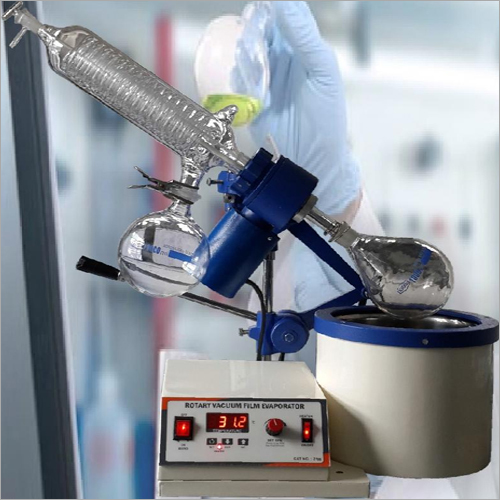
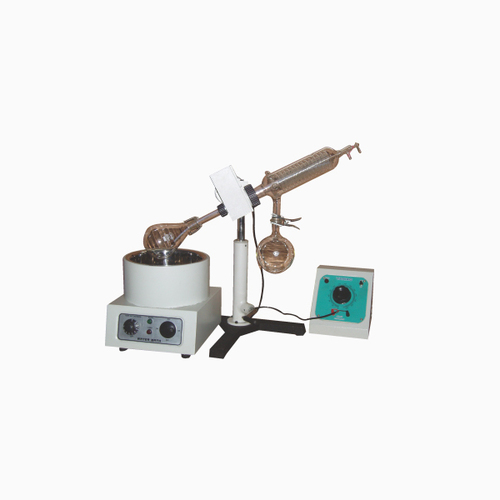
Widely praised for its quality, our enterprise is engaged in offering Rotary Vacuum Film Evaporator. This evaporator is used to get rid of solvents from samples through the process of evaporation. The offered Rotary Vacuum Film Evaporator has extensive employments in a laboratory setting. This evaporator is praised for its sturdy construction and long service life.
Efficient Distillation with Advanced ControlIntegrating digital temperature and speed control, the Rotary Vacuum Film Evaporator delivers superior evaporation efficiency, suitable for both batch and continuous chemical processing. The high-efficiency condenser and PTFE vacuum sealing ensure optimal solvent recovery while minimizing losses.
Robust Construction and SafetyCrafted from stainless steel and Borosilicate Glass 3.3, the equipment features corrosion-resistant coatings for longevity. Dry run and over-temperature protections safeguard users and materials, providing a reliable solution for demanding laboratory and industrial environments.
User-Friendly Design and Versatile MobilityMounted on castor wheels, this evaporator offers convenient mobility within facilities. The automatic lift system and ergonomic design simplify operations, while the digital display ensures precise control over temperature and rotational speed during solvent evaporation.
FAQ's of Rotary Vacuum Film Evaporator:
Q: How does the automatic lift system benefit the rotary vacuum film evaporator's operation?
A: The automatic lift mechanism allows for effortless adjustment of the rotary flask, facilitating safe and convenient sample handling, especially during process start and completion. This feature helps prevent accidents and ensures smooth workflow in the distillation process.
Q: What types of applications are suitable for this rotary vacuum film evaporator?
A: This equipment is ideal for chemical, pharmaceutical, and laboratory settings, particularly for distillation, solvent recovery, thin-film evaporation, and sample preparation. It supports both batch and continuous processing depending on operational requirements.
Q: When should the dry run protection and over-temperature protection features be utilized?
A: These safety features operate automatically during the equipment's use. Dry run protection prevents the system from operating without sufficient liquid, protecting the heating elements, while over-temperature protection prevents unsafe thermal conditions, ensuring the integrity of both equipment and samples.
Q: Where can this rotary vacuum film evaporator be installed and operated?
A: With its robust build and mobility provided by castor wheels, the evaporator can be deployed in laboratories, research institutions, pharmaceutical manufacturing units, and chemical production facilities across India and other global markets.
Q: What is the process of vacuum distillation using this equipment?
A: The process involves introducing the sample into the rotary flask, applying vacuum, and heating via the raised/lift water bath with external heating element. The rapid thin film evaporation produces purified distillates, which are condensed by the high-efficiency vertical double coil condenser and collected in receiving flasks.
Q: How do the digital controls enhance the unit's usability?
A: Digital controls allow precise adjustment of temperature and rotational speed, leading to consistent and reproducible results. The digital display provides real-time feedback, making it straightforward for users to monitor and optimize process parameters.
Q: What is the benefit of using Borosilicate Glass 3.3 for the glassware?
A: Borosilicate Glass 3.3 is highly resistant to thermal shock and chemical corrosion, ensuring the safety and longevity of the glassware. This makes it especially suitable for demanding laboratory and industrial applications where reliability and purity are essential.






 Send Inquiry


 Send Inquiry


 English
 Spanish
 French
 German
 Italian
 Chinese (Simplified)
 Japanese
 Korean
 Arabic
 Portuguese