About SPEED OF SOUND USING KUNDTS TUBE EXPERIMENT
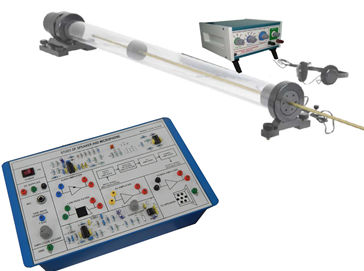
Explore the splendid world of physics with the heroic SPEED OF SOUND USING KUNDT'S TUBE EXPERIMENT. This uncommon, cost-effective apparatus features an 80 cm transparent glass tube (25 mm inner diameter) with robust rubber stoppers, perfect for accurate acoustic demonstrations. Get everything needed-from cork dust and a metal rod to a stable metal stand and dispenser. Compatible with a wide audio frequency range, this setup is ideal for educational demonstrations of sound propagation, helping students and educators make science learning extraordinary. Proudly distributed, exported, and manufactured in India for impressive laboratory experiences.
Versatile Educational Tool for Physics
SPEED OF SOUND USING KUNDT'S TUBE EXPERIMENT is tailored for usage in physics laboratories, especially for educational demonstrations and hands-on experiments. Suitable for schools, colleges, and research labs, it allows learners and instructors to practically measure the speed of sound in air. The application method involves generating sound waves in the tube and visually observing powder patterns-an excellent combination of theory and real-world physics. Its splendid design ensures stability and clear results every time.
Efficient Distribution and Supply Policy
With a reliable supply ability, distributors and suppliers can quickly handover units upon confirmed orders. Sample policy is available on request, with the asking price provided for bulk or single setups. The arrival of each SPEED OF SOUND USING KUNDT'S TUBE EXPERIMENT is guaranteed on time within India's main domestic market. Responsive support for queries ensures a seamless acquisition process for academic institutions, resellers, and laboratories.
FAQ's of SPEED OF SOUND USING KUNDTaS TUBE EXPERIMENT:
Q: How is the SPEED OF SOUND USING KUNDT'S TUBE EXPERIMENT set up for classroom demonstrations?
A: To set up the experiment, simply mount the transparent glass tube on the stable metal stand, secure it with rubber stoppers, and insert the powder. Connect an audio frequency generator to produce sound waves within the tube, then observe the powder's displacement to measure the speed of sound.
Q: What materials are included in the SEK Kundt's Tube kit?
A: The kit includes a glass tube (80 cm), rubber stoppers, cork dust or resin powder, a metal rod, wooden block, powder dispenser, scale, and a stable metal stand with clamps. All necessary accessories for a single experiment setup are provided.
Q: When is this experiment typically used in educational institutions?
A: This experiment is commonly introduced during lessons on acoustics or wave motion in secondary schools, colleges, or physics labs. It helps illustrate core principles related to the propagation of sound in air.
Q: Where can I purchase or request samples of this experiment kit?
A: You can acquire the SPEED OF SOUND USING KUNDT'S TUBE EXPERIMENT through authorized distributors, manufacturers, exporters, or suppliers in India. Sample requests and pricing details can be arranged directly with the supplier.
Q: What is the benefit of using this experiment over traditional demonstrations?
A: The experiment offers a hands-on, visual way to measure and understand the speed of sound, enhancing student engagement. Its transparent design allows clear observation, making learning more interactive and effective.







 Send Inquiry


 Send Inquiry


 English
 Spanish
 French
 German
 Italian
 Chinese (Simplified)
 Japanese
 Korean
 Arabic
 Portuguese