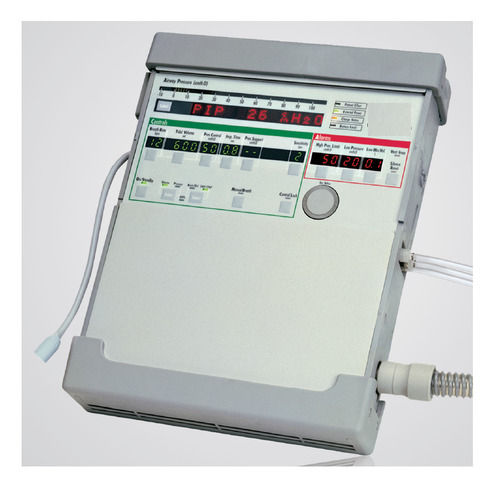
About Transport Ventilator
The ventilator weighs only 13.4 pounds yet provides many advanced functions required for todays therapy needs pressure control, pressure support and flow-triggering. This sophisticated technology combined with enhanced portability enables the user to be mobile and comfortablePortable Performance for Emergency CareEngineered for emergency and transport scenarios, the Transport Ventilator combines reliability, compactness, and ease of use. Its lightweight design with a convenient handle makes it highly transportable, while a durable battery supports up to 8 hours of ventilation, ensuring continuous care even during prolonged journeys or power outages.
Comprehensive Ventilation ModesFeaturing sophisticated modes like Volume Control, Pressure Control, SIMV, and CPAP, the ventilator addresses a variety of clinical needs for both adults and children. Its adjustable oxygen concentration (21% to 100%) and built-in or external humidification options enhance patient comfort and adaptability in diverse settings.
Safety and User-Friendly OperationWith multiple visual and audible alarms, automatic self-testing, and overpressure safeguards, the ventilator prioritizes patient safety. The clear LED/LCD display ensures efficient monitoring, while compatibility with both reusable and disposable circuits streamlines maintenance and infection control.
FAQ's of Transport Ventilator:
Q: How do I select the appropriate ventilation mode on the Transport Ventilator?
A: Choosing a ventilation mode is done through the intuitive LED/LCD display interface by following on-screen prompts. Users can select from Volume Control, Pressure Control, SIMV, and CPAP, customizing settings based on the patient's clinical requirements (adult or pediatric). Consult the user manual for detailed operational steps.
Q: What benefits does the built-in battery backup offer during patient transport?
A: The ventilator's battery backup provides up to 8 hours of runtime, ensuring uninterrupted operation during patient transfers and emergency situations when AC power is unavailable. This feature is especially crucial for emergency medical services and inter-facility transport.
Q: When do the visual and audible alarms activate, and what situations do they indicate?
A: Alarms are automatically activated for safety-critical conditions, including low or high pressure, power failure, and apnea. Visual and audible alerts ensure caregivers rapidly address issues, optimizing patient safety during operation and transport.
Q: Where can this transport ventilator be used effectively?
A: This ventilator is ideal for use in ambulances, emergency rooms, intensive care, inter-hospital transfers, and disaster response scenarios. Its portability, lightweight design, and robust features support safe ventilation in diverse clinical and pre-hospital settings across India and beyond.
Q: What process should be followed to set up humidification for the ventilator?
A: The ventilator supports both built-in and external humidification. Users can select the desired humidification mode based on clinical needs and available accessories. Refer to the device's instructions for connecting humidification systems and ensuring proper moisture delivery to the patient.
Q: How does the ventilator cater to both reusable and disposable patient circuits?
A: The device is designed to be compatible with both reusable and disposable patient circuits, offering flexibility and convenient infection control. Healthcare facilities can choose the circuit type based on their protocols and patient care preferences.






 Send Inquiry



 Send Inquiry


 English
 Spanish
 French
 German
 Italian
 Chinese (Simplified)
 Japanese
 Korean
 Arabic
 Portuguese