Parallel Forces Apparatus

Parallel Forces Apparatus

Parallel Forces Apparatus Specification

  • Features
  • Rugged construction, corrosion-resistant, easy to use, complete with accessories
  • Technology
  • Mechanical
  • Automation Grade
  • Manual
  • Machine Type
  • Educational Equipment
  • Control System
  • None (Manual)
  • Power Source
  • Manual
  • Surface Treatment
  • Powder Coated
  • Accessories Type
  • Weights, Pans, Hooks
  • Accuracy
  • 1 mm
  • Type
  • Parallel Forces Apparatus
  • Material
  • Mild Steel and Aluminum
  • Function
  • To study the equilibrium of parallel forces
  • Application
  • Physics and Engineering Laboratories
  • Usage Level
  • Suitable for schools, colleges, and engineering institutions
  • Graduations
  • Clearly marked scale for measurements
  • Color
  • Blue or as per manufacturer
  • Base
  • Heavy, stable, and non-slip
  • Packaging
  • Supplied in a sturdy box with all standard accessories
  • Length of Beam
  • Approx. 1 meter
  • Weight Carriers
  • Provided and adjustable
  • Bearings
  • Low friction type
  • Mounting
  • Table top
  • Compliance
  • Meets standard laboratory safety regulations
  • Finish
  • Smooth and durable


About Parallel Forces Apparatus

Parallel Forces Apparatus

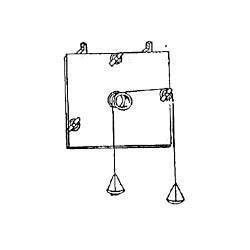
(Simplesupported beam type supported at its ends) For verification e non ciequilibrium of parallel forces, law of lever and forces on beam etc. Consistingof admin thrust type 10kg, tubular spring balances fixed on wooden polishedboard, a wooden bar with steel back plate. Complete with stirrups, hooks andtwo 1kg. weights.


Robust Construction and User-Friendly Design

Crafted from mild steel and aluminum, the Parallel Forces Apparatus is engineered for durability and stability. The adjustable weight carriers and non-slip base ensure reliable experimentation, while the smooth, powder-coated finish offers corrosion resistance and long-lasting performance even under frequent use.


Precision for Accurate Learning

With graduated scales and an accuracy of 1 mm, this apparatus allows students and educators to conduct experiments with confidence. It encourages accurate measurement and analysis of parallel force equilibrium, reinforcing core concepts in physics and engineering curricula.


Ready-to-Use Complete Kit

Supplied with weights, pans, hooks, and a sturdy box, the Parallel Forces Apparatus offers hassle-free setup for both instructors and students. It's compliant with laboratory safety standards, supporting a safe and efficient learning environment in classrooms and labs.

FAQ's of Parallel Forces Apparatus:


Q: How do I set up the Parallel Forces Apparatus for a laboratory experiment?

A: Begin by placing the device on a stable tabletop using its non-slip base. Attach the provided weight carriers, pans, and hooks to the beam. Ensure that measurements are aligned with the clearly marked scale before proceeding with experiments to achieve accurate results.

Q: What does the Parallel Forces Apparatus measure and demonstrate?

A: This apparatus is used to study the equilibrium of parallel forces. It enables measurement and analysis of force distribution and reactions along a beam, which is fundamental in understanding basic physics and engineering concepts relating to statics.

Q: When is it suitable to use the Parallel Forces Apparatus in educational settings?

A: The apparatus is ideal for practical lessons in physics and engineering laboratories, especially during units covering force equilibrium, beam reactions, or statics. It is designed for use in schools, colleges, and engineering institutions.

Q: Where should the apparatus be placed during experiments for best results?

A: For optimal performance and safety, position the apparatus on a firm, level tabletop. The heavy, stable base helps prevent movement, ensuring precise and consistent measurements during experimentation.

Q: What process is involved in conducting force equilibrium experiments using this apparatus?

A: The experimental process involves positioning weights at known locations on the beam, recording corresponding reactions using the marked scale, and adjusting the weight carriers as needed. Observing these measurements helps students deduce the equilibrium conditions for parallel forces.

Q: What are the main benefits of using this apparatus in a laboratory?

A: Key benefits include enhanced learning through hands-on experience, high measurement accuracy (1 mm), durable construction, and easy setup. The apparatus supports repeated use while maintaining precision, making it an excellent tool for reinforcing core principles in physics and engineering.

Tell us about your requirement
product

Price:

Quantity
Select Unit

  • 50
  • 100
  • 200
  • 250
  • 500
  • 1000+
Additional detail
Mobile number

Email

More Products in Engineering Goods & Equipment Category

Compound Screw Jack With Transverse Motion

Compound Screw Jack With Transverse Motion

Automation Grade : Manual

Control System : Rotary Screw Mechanism

Machine Type : Compound Screw Jack

Material : High Grade Mild Steel / Alloy Steel

Features : Robust Construction, High Load Bearing Capacity, Smooth Transverse Movement, Corrosion Resistant Finish

Type : Compound Screw Jack With Transverse Motion

D Pharmacy Instrument

D Pharmacy Instrument

Automation Grade : Manual

Control System : Hand Operated

Machine Type : Educational Laboratory Instrument

Material : Stainless Steel

Features : Corrosion Resistant, Durable, Easy to Clean

Type : Laboratory Instrument

Winch Crab Single Purchase

Winch Crab Single Purchase

Automation Grade : Manual

Control System : Hand Operated

Machine Type : Winch Crab

Material : Mild Steel

Features : Robust Construction, Easy Installation, Corrosion Resistant

Type : Manual Winch Crab

Universal Force Table

Universal Force Table

Automation Grade : Manual

Control System : Mechanical

Machine Type : Educational Lab Equipment

Material : Aluminum Alloy Top, Stainless Steel Accessories

Features : 360 Rotatable Tabletop, Graduated Circle, Robust Construction

Type : Universal Force Table


Back to top