About The Combined Compression And Extension of Springs Apparatus
The Combined Compression And Extension of Springs Apparatus
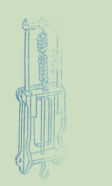
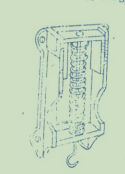
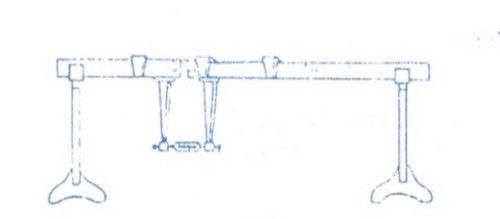
The unit is complete with six standardsteel springs 20 cm long each of different thickness, three for compression andthree for extension. The cast iron bracket is provided with four holes forattaching it to the wall and is fitted with sliding venire and scalearrangement.
Demonstrate Spring Principles EffectivelyThis apparatus is engineered to illustrate both compression and extension of springs, offering a comprehensive understanding of Hooke's law and force measurement. It is perfectly suited for physics laboratories and engineering classrooms, providing clear, visual results for a wide range of experiments on spring mechanics.
Robust Construction with Easy OperationCrafted from powder-coated mild and stainless steel, this unit boasts a corrosion-resistant finish and a sturdy base, ensuring safety and long-term durability. Its compact design makes it simple to use and transport, while the manual hand-operated system provides full user control over force application and measurement.
FAQ's of The Combined Compression And Extension of Springs Apparatus:
Q: How do you use the Combined Compression and Extension of Springs Apparatus in a laboratory setting?
A: To use the apparatus, securely mount it on a flat surface, select the desired spring, and attach the weights incrementally. Observe the spring's displacement using the graduated scale (0-250 mm). Manual operation allows for precise control, enabling detailed investigations of both compression and extension processes.
Q: What is the maximum load capacity of this springs apparatus?
A: The apparatus can handle loads up to 1 kg, allowing you to perform accurate and varied experiments on the mechanical properties of springs without exceeding safe operational limits.
Q: When is this apparatus typically used in an educational environment?
A: It is primarily used during physics and mechanical engineering laboratory sessions to demonstrate the principles of spring mechanics, such as Hooke's law, and to conduct experiments analyzing the behavior of materials under compression and extension.
Q: Where is this apparatus best suited for operation?
A: This equipment is ideal for use in physics laboratories, mechanical engineering labs, and other educational settings where hands-on demonstration of mechanical properties and spring dynamics is required.
Q: What is the benefit of using manual hand-operated control for this apparatus?
A: The manual hand-operated design fosters direct user engagement, providing students and educators with a tangible understanding of applied force, spring displacement, and measurement accuracy, enhancing the learning experience.
Q: What accessories are included with the apparatus?
A: The apparatus comes with a set of hardened steel springs, a graduated measuring scale, and standard weights, offering all components needed for demonstration and experiment setup.
Q: How does the robust construction contribute to the apparatus's performance and longevity?
A: The powder-coated mild and stainless steel frame with corrosion-resistant surfaces ensures stability, durability, and low maintenance, making it reliable for repeated use in busy educational environments.








 Send Inquiry


 Send Inquiry


 English
 Spanish
 French
 German
 Italian
 Chinese (Simplified)
 Japanese
 Korean
 Arabic
 Portuguese