Deflection of Beam Apparatus About
Deflection of Beam Apparatus
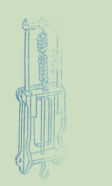
Consistingof two knife edge and supports, a hanger with knife edge, and a pointer moving over a graduated scale. Completewith scale pan and two beams, one of iron and the other of wood each beam is120cm in length. Without weights.
Versatile Educational Tool for Beam DeflectionThis apparatus provides a practical solution for demonstrating and investigating beam deflection under various loads in academic settings. By allowing different support configurations and beam lengths, it facilitates in-depth study, helping students understand fundamental engineering concepts through hands-on experience.
Robust Construction and User-Friendly DesignBuilt with a powder-coated mild steel frame and non-slip feet, the apparatus prioritizes safety and longevity. Its modular design allows for easy assembly and disassembly, making it suitable for both fixed laboratory setups and portable demonstrations. A corrosion-resistant finish ensures durability through repeated use.
Accurate and Reliable Measurement FeaturesEquipped with a graduated scale and either a dial gauge or vernier scale, users can measure deflection with an accuracy of 1 mm. Removable supports further enhance the apparatus's adaptability, accommodating experiments involving simply supported or cantilever beam arrangements.
FAQ's of Deflection of Beam Apparatus:
Q: How do I set up the Deflection of Beam Apparatus for experiments?
A: Assembly is straightforward: place the frame on a stable surface using its non-slip feet, install the removable supports according to the desired beam configuration (simply supported or cantilever), and secure the aluminum or mild steel beam. Attach the dial gauge or vernier scale for measurement and ensure the load hanger is in position before applying weights.
Q: What can I study using this apparatus?
A: This apparatus is designed to help users study and measure the deflection of beams under various loading conditions. It allows for the comparison of theoretical and experimental results, thus enhancing understanding of material properties, loading modes, and structural behavior in engineering education.
Q: When should I use a dial gauge versus a vernier scale for measurement?
A: A dial gauge is best for capturing small deflections with greater precision, while a vernier scale is suitable for larger or less sensitive measurements. Choose the instrument based on the expected magnitude of deflection and the required accuracy for your experiment.
Q: Where is the apparatus typically used?
A: It is utilized in engineering laboratories, universities, and other educational institutes. As a bench-top, portable device, it's convenient for classroom demonstrations, practical laboratory sessions, and hands-on workshops.
Q: What is the process for measuring beam deflection using the apparatus?
A: After configuring the supports and securing the beam, position the measurement device at the deflection point, typically mid-span. Apply weights incrementally to the hanger, and record the resulting displacement from the dial gauge or vernier scale at each increment for analysis.
Q: How does the apparatus ensure safe and accurate experimentation?
A: Safety is enhanced through a stable, non-slip base and a rigid, corrosion-resistant frame structure. The apparatus is rated for loads up to 5 kg and features easy, controlled load application with hook weights and a dedicated hanger, ensuring secure and hazard-free usage during experiments.
Q: What are the benefits of using this apparatus in engineering education?
A: Students gain practical experience in structural analysis, deepening theoretical knowledge by visualizing and quantifying beam behavior under loads. The apparatus's portability, accuracy, and versatility make it a valuable investment for any educational laboratory.








 Send Inquiry


 Send Inquiry


 English
 Spanish
 French
 German
 Italian
 Chinese (Simplified)
 Japanese
 Korean
 Arabic
 Portuguese