

Call us now
08045803621
Call us now
08045803621
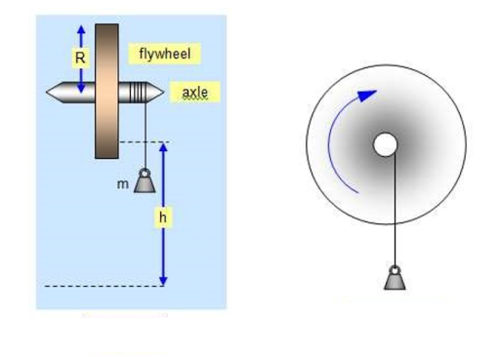
Comprising of carefully machined andbalanced cast iron st and the steel spindle is supported on ball bearings instrong iron brackets The smoothly painted black and is marked with a line. Apointer is fixed to one of the boxen Diametric hole is drifted in the shaft totake a pin and cord. The base is provided whitetail come that the apparatus canbe fixed to wall. Complete with cord and hook.
a) Wheel 15 cm aid
b)Wheel 20 cm aid
c) Wheel 25 cm aid

Price:
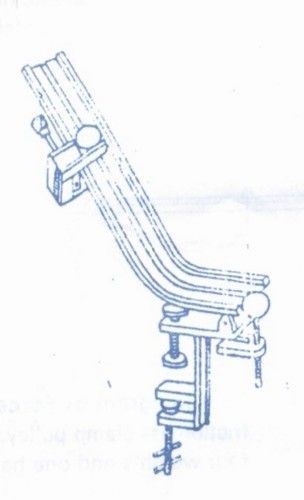
Machine Type : Manual Apparatus
Technology : Impact and Momentum Demonstration
Function : Demonstrates Law of Conservation of Mass in TwoDimensional Collisions
Features : Sturdy Construction, Easy Assembly, Precise Measurement Scale
Type : Physics Laboratory Apparatus
Surface Treatment : Powder Coated
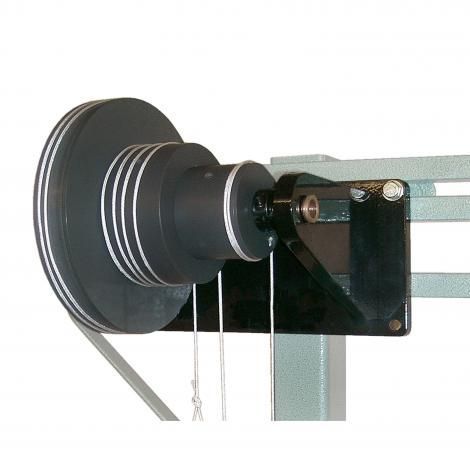
Machine Type : Differential Gear System
Technology : Precision Engineering
Function : Power Transmission and Motion Control
Features : Corrosion Resistance, High Load Capacity, Enhanced Durability
Type : Differential Axle with Wheel
Surface Treatment : Galvanized

Machine Type : Bench Top, Portable
Technology : Mechanical
Function : To study and measure the deflection of beams under various loads
Features : Removable supports, Graduated scale for accurate measurement, Rigid frame, Easy load application
Type : Educational Laboratory Apparatus
Surface Treatment : Powder Coated

Machine Type : Bench Mounted Apparatus
Technology : Mechanical
Function : To demonstrate and measure centrifugal force
Features : Sturdy construction, Clear scale display, Compact design, Transparent enclosure
Type : Laboratory Testing Apparatus
Surface Treatment : Powder Coated



 Send Inquiry


 Send Inquiry


 English
 Spanish
 French
 German
 Italian
 Chinese (Simplified)
 Japanese
 Korean
 Arabic
 Portuguese