Speed Measurement Trainer Module About
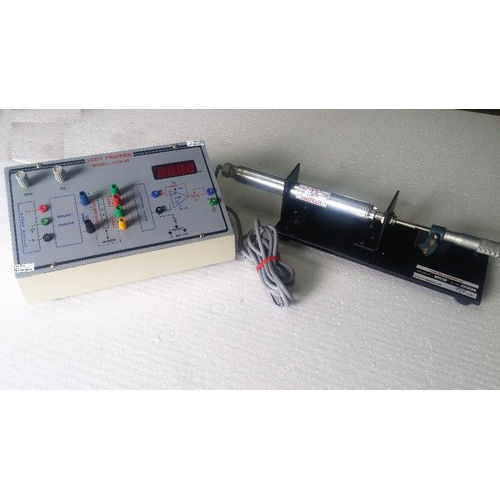
Speed Measurement Trainer Module
| Brand |
Micro Technologies |
| Speed Range |
Upto 1400 RPM |
| Speed Sensor |
Magnetic Pickup. |
| Indicator Display |
4 digit LED display. |
| Power Supply |
1.2V to 12V
|
Reliable Speed MeasurementThe Speed Measurement Trainer Module utilizes advanced optical/photo sensor technology to deliver highly accurate speed measurements. Its digital LED display ensures easy monitoring, while terminal jacks and LED indicators enhance user interaction. Designed for both educational and industrial training, this trainer supports practical understanding and real-time testing.
Versatile and Safe OperationBuilt with overload and short-circuit protection, the trainer ensures safe handling during experiments. Its table-top mounting and sturdy powder-coated metal body make it suitable for rigorous usage. The module operates efficiently within a 0 to 50C temperature range, while safety features safeguard users and equipment alike.
Comprehensive Training SupportThe trainer comes complete with patch cords, a user manual, and a built-in calibration facility for accuracy. Its adjustable-speed DC motor and reset function allow users to simulate varied experimental scenarios. These features are tailored to support effective classroom demonstrations and hands-on technical training.
FAQ's of Speed Measurement Trainer Module:
Q: How does the Speed Measurement Trainer Module measure rotational speed?
A: The trainer uses an optical/photo sensor pickup to detect the speed of the DC motor, providing real-time feedback that is displayed digitally on the LED panel.
Q: What is the process for adjusting the speed in this trainer module?
A: Users can digitally control the DC motor's speed using the module's panel controls, allowing for adjustments from 10 to 3000 RPM with precise accuracy.
Q: When should I perform calibration, and how is it accomplished?
A: Calibration should be done before initial use or after maintenance to ensure measurement accuracy. The module includes an accessible calibration facility and patch cords; instructions are provided in the user manual.
Q: Where is this Speed Measurement Trainer ideally used?
A: This equipment is designed for educational laboratories, industrial training centers, and institutions focusing on technical studies, providing hands-on experience in speed measurement and control.
Q: What accessories are included with the trainer module?
A: The package comes with a user manual, patch cords for connection, and all necessary components for immediate setup and calibration.
Q: How does the protection feature benefit users during operation?
A: Overload and short-circuit protection ensure the module remains safe against electrical faults, minimizing risks and protecting both the user and equipment during prolonged use.
Q: What is the main benefit of using the Speed Measurement Trainer in training environments?
A: It offers a practical platform to learn and understand speed measurement, control mechanisms, and handling of electrical equipment with built-in safety, fostering technical competence among students and trainees.






 Send Inquiry


 Send Inquiry


 English
 Spanish
 French
 German
 Italian
 Chinese (Simplified)
 Japanese
 Korean
 Arabic
 Portuguese