About Moment of Inertia of Flywheel
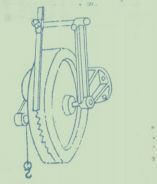
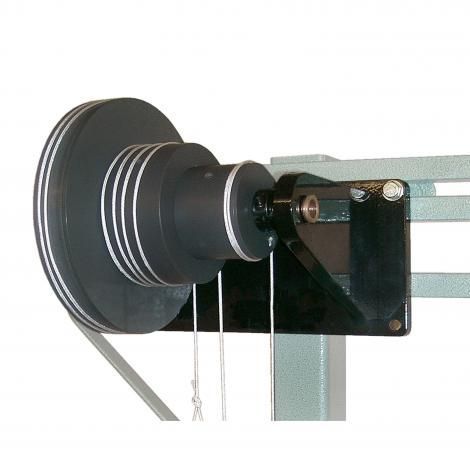
Take advantage of this grand Moment of Inertia of Flywheel apparatus, engineered for top-ranking precision and formidable durability. With a flywheel diameter of 300 mm and a shaft diameter of 20 mm, it is constructed from a cast iron flywheel and steel shaft, ensuring robust performance in laboratory conditions. The device features a bench-mounted, powder-coated mild steel base, precise 0.01 sec stopwatch accuracy, 0.5% measurement accuracy, and a reliable manual release mechanism. Especially suitable for measuring up to 5 kg mass, this laboratory apparatus is an excellent choice for physics and engineering labs across India.
Comprehensive Laboratory Solution for Moment of Inertia
Ideal for physics and engineering laboratories, this apparatus utilizes the retardation method (falling mass) to determine the moment of inertia accurately. Find smooth rotation and precise shaft alignment, enhanced by a locking arrangement for safety. General use spans educational demonstrations and experimental investigations, while the formidable construction and powder-coated finish provide longevity and reliability for rigorous daily usage.
Export Services and Secure Packaging Assurance
Experience seamless international distribution with secure shipping and durable packaging designed to protect the apparatus in transit. Our main export markets include educational institutions and research centers worldwide. Purchase orders are promptly processed, with products dispatched from a designated FOB Port for efficient drop-off. Clients can rely on tamper-resistant packaging, ensuring that every delivery arrives ready for immediate use in their laboratory setting.
FAQ's of Moment of Inertia of Flywheel:
Q: How is the moment of inertia determined using this flywheel apparatus?
A: The moment of inertia is determined through the retardation method, where a known mass is allowed to fall, causing the flywheel to rotate. The time taken for rotation is measured using the included precise stopwatch, and calculations are performed based on the apparatus's robust design.
Q: What makes this apparatus suitable for laboratory use?
A: This apparatus features a grand, bench-mounted design with robust construction, powder-coated mild steel base, and precise shaft alignment, making it especially suitable for the demanding environments of physics and engineering labs.
Q: When should the locking arrangement for the flywheel be used?
A: The locking arrangement should be activated whenever the apparatus is not in active use or during setup to prevent unintended motion, ensuring user safety and equipment stability.
Q: Where can this equipment be installed?
A: Designed for bench mounting, this apparatus can be securely installed on any standard laboratory workbench, offering easy access and a stable platform for experiments.
Q: What accessories are provided with the purchase of this apparatus?
A: The package includes a cast iron flywheel, steel shaft, stop watch with 0.01 sec accuracy, masses for testing, and precision bearings-everything needed for immediate setup and operation.
Q: How does the apparatus ensure measurement accuracy?
A: With top-ranking measurement precision of 0.5% and smooth rotation from two bearings, combined with manual controls and a highly accurate stopwatch, the apparatus guarantees reliable and reproducible results.






 Send Inquiry


 Send Inquiry


 English
 Spanish
 French
 German
 Italian
 Chinese (Simplified)
 Japanese
 Korean
 Arabic
 Portuguese